



p38δ
p38δ mitogen-activated protein kinase (MAPK) is a stress-responsive serine/threonine kinase that regulates differentiation, apoptosis, and cellular adaptation to environmental stimuli[1]. Mechanistically, p38δ participates in MAPK signaling cascades that modulate transcriptional programs via upstream kinases MKK3/6 and downstream effectors, influencing tissue-specific functions such as epithelial cell homeostasis and osteoblast differentiation[2][3]. In disease models, p38δ exhibits dual roles, acting as a tumor suppressor in oesophageal squamous cell carcinoma by limiting proliferation, migration, and anchorage-independent growth, while in other contexts it may promote cancer progression[4][1]. Compared with other p38 isoforms, p38δ displays distinct substrate specificity and lower sensitivity to classical inhibitors, making it functionally divergent from p38α and p38β[2][1]. Its restricted expression patterns and isoform-specific signaling differentiate it in both physiological and pathological contexts, including neurodegenerative disorders, inflammatory diseases, and diabetes[1]. For experimental applications, engineered activation of p38δ through fusion with upstream activators allows selective study of its cellular effects, whereas the paucity of selective pharmacological modulators highlights the need for isoform-specific tools in research[4][1]. These characteristics underscore p38δ’s emerging relevance as a target for mechanistic studies and disease modeling, particularly where isoform-specific signaling impacts cellular fate decisions[2][4][1].
References:
- [1]. Iñesta-Vaquera FA, et al. Alternative p38 MAPK pathways. In: Stress-Activated Protein Kinases. Topics in Current Genetics. 2007
- [2]. Greenblatt MB, et al. The p38 MAPK pathway is essential for skeletogenesis and bone homeostasis in mice. J Clin Invest. 2010 Jul;120(7):2457-73. [Content Brief]
- [3]. O'Callaghan C, et al. Loss of p38δ mitogen-activated protein kinase expression promotes oesophageal squamous cell carcinoma proliferation, migration and anchorage-independent growth. Int J Oncol. 2013 Aug;43(2):405-15. [Content Brief]
- [4]. O'Callaghan C, et al. p38δ MAPK: Emerging Roles of a Neglected Isoform. Int J Cell Biol. 2014;2014:272689. [Content Brief]
-
p38δ Related Products (13)
Related Products (13)

- 1
-
Doramapimod
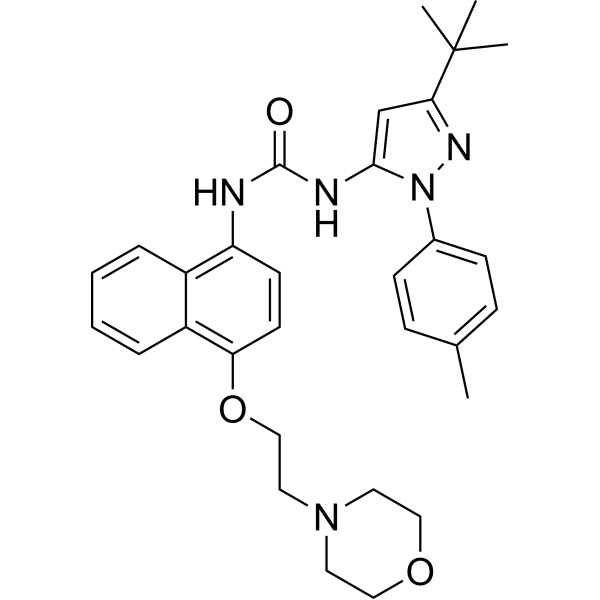 0 ImagesSynonyms: BIRB 796
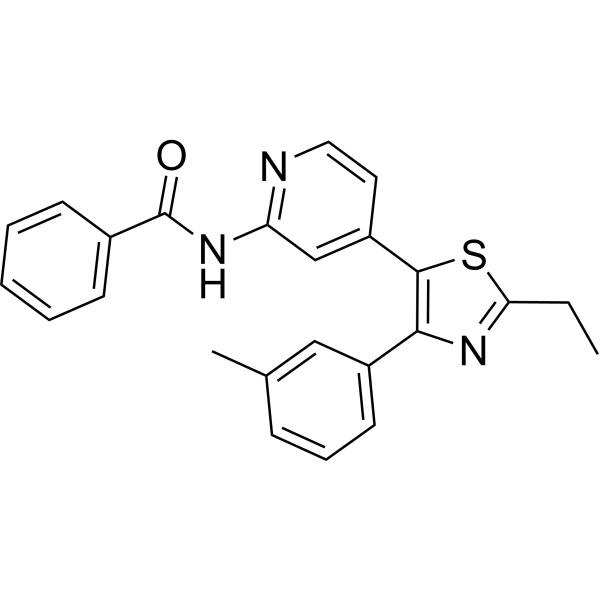
-
AMG-548 dihydrochloride
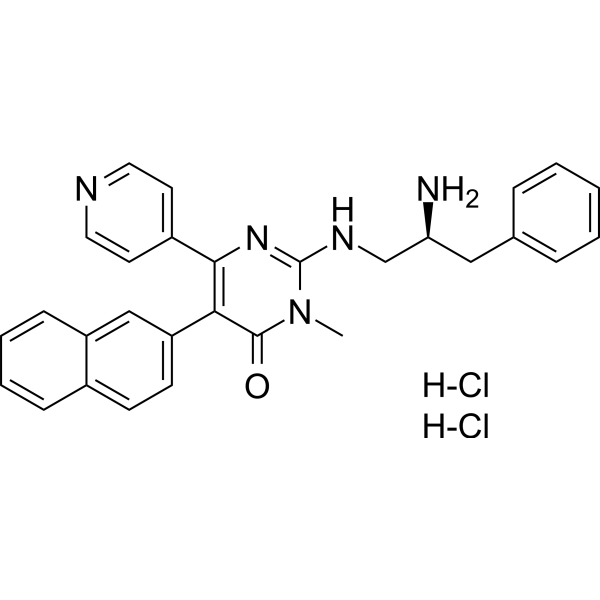 0 ImagesAMG-548 dihydrochloride, an orally active and selective p38α inhibitor (Ki=0.5 nM), shows slightly selective over p38β (Ki=36 nM) and >1000 fold selective against p38γ and p38δ. AMG-548 dihydrochloride is also extremely potent in the inhibition of whole blood LPS stimulated TNFα (IC50=3 nM). AMG-548 dihydrochloride inhibits Wnt signaling by directly inhibiting Casein kinase 1 isoforms δ and ε.
-
AMG-548
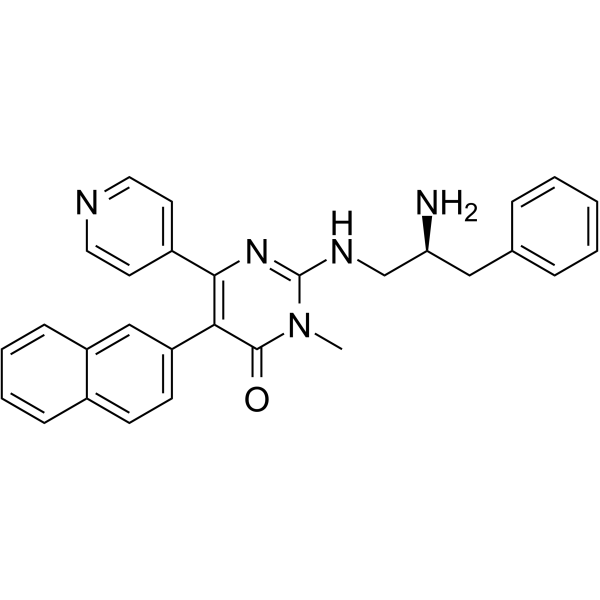 0 ImagesAMG-548, an orally active and selective p38α inhibitor (Ki=0.5 nM), shows slightly selective over p38β (Ki=36 nM) and >1000 fold selective against p38γ and p38δ. AMG 548 is also extremely potent in the inhibition of whole blood LPS stimulated TNFα (IC50=3 nM). AMG-548 inhibits Wnt signaling by directly inhibiting Casein kinase 1 isoforms δ and ε.
-
SJFδ
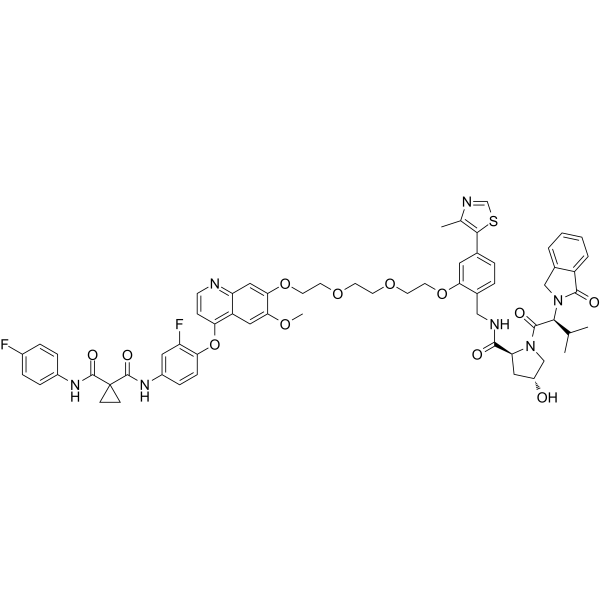 0 ImagesCat. No.: HY-114405CAS No.: 2254609-23-7SJFδ is a p38δ PROTAC degrader with a DC50 of 46.17 nM. SJFδ selectively induces ubiquitin-proteasome-dependent degradation of p38δ by forming a ternary complex with p38δ and the VHL E3 ligase, with no effect on other p38 isoforms or members of the MAPK family. SJFδ can be used for breast cancer research.
-
p38-α MAPK-IN-5
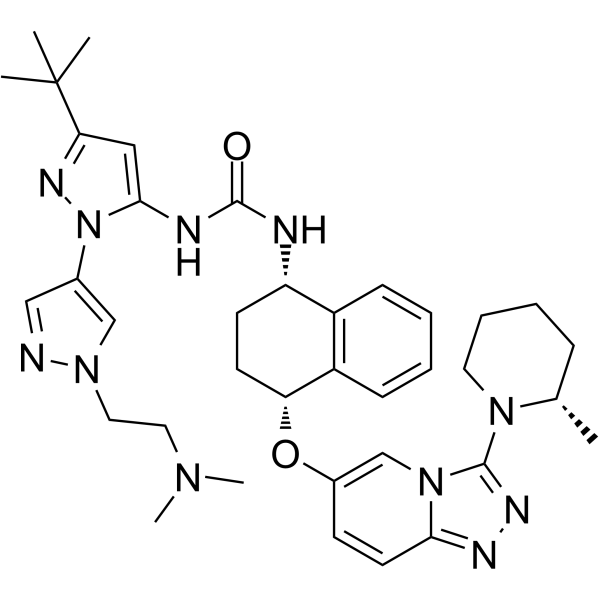 0 ImagesCat. No.: HY-147518CAS No.: 1443242-46-3

-
AMG-548 hydrochloride
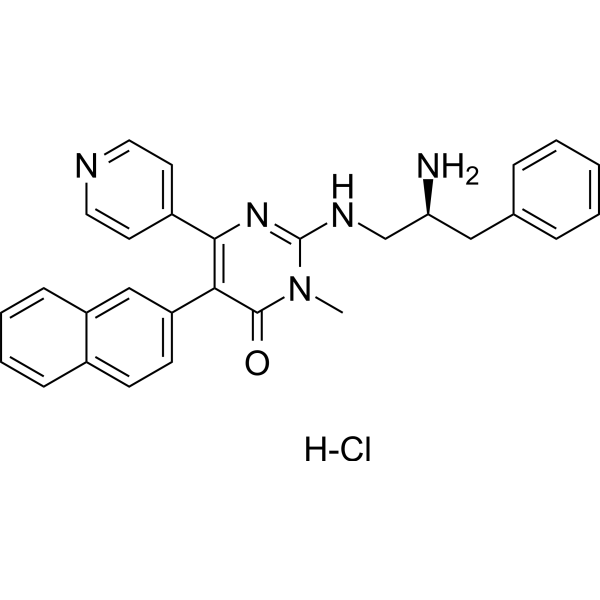 0 ImagesCat. No.: HY-108642ACAS No.: 2437438-16-7AMG-548 hydrochloride, an orally active and selective p38α inhibitor (Ki=0.5 nM), shows slightly selective over p38β (Ki=36 nM) and >1000 fold selective against p38γ and p38δ. AMG-548 hydrochloride is also extremely potent in the inhibition of whole blood LPS stimulated TNFα (IC50=3 nM). AMG-548 hydrochloride inhibits Wnt signaling by directly inhibiting Casein kinase 1 isoforms δ and ε.
-
p38-α MAPK-IN-11
 0 ImagesCat. No.: HY-180824P38-α MAPK-IN-11 (Compound 4C) is a selective inhibitor of P38α MAPK that can cross the blood-brain barrier with an IC50 value of 43 nM. P38-α MAPK-IN-11 has extremely low inhibitory activity against other MAPK subtypes, namely p38β, p38γ, and p38δ, with IC50 values of > 100 nM, > 100 nM, and 48.6 mM respectively. P38-α MAPK-IN-11 exhibits outstanding neuroprotective effects and anti-neuroinflammatory effects in Alzheimer's disease-like rat models. P38-α MAPK-IN-11 can be used for the study of Alzheimer's disease.
-
Doramapimod (GMP)
 0 ImagesCat. No.: HY-10320GCAS No.: 285983-48-4Synonyms: BIRB 796 (GMP)Doramapimod GMP (BIRB 796 GMP) is an orally active inhibitor for p38 MAPK, with IC50s of 38, 65, 200 and 520 nM, for p38α, p38β, p38γ, p38δ. Doramapimod exhibits cytotoxicity and antitumor activity against multiple myeloma, synergizes with multidrug resistance protein 1 (ABCB1) and aurora kinase inhibitor VX680, promoting their antitumor efficacy against oral epidermoid carcinoma and cervical cancer. Doramapimod also exhibits anti-inflammatory activity.
- 1



